Home > Surgical Services > Surgical Technology

Surgical Technology

Surgical Technology

Degree Type: Associate of Applied Science, AAS
Pathway: Health Sciences
catalog linkPathway InformationRequest Information

Why Choose Surgical Technology at PPSC? 

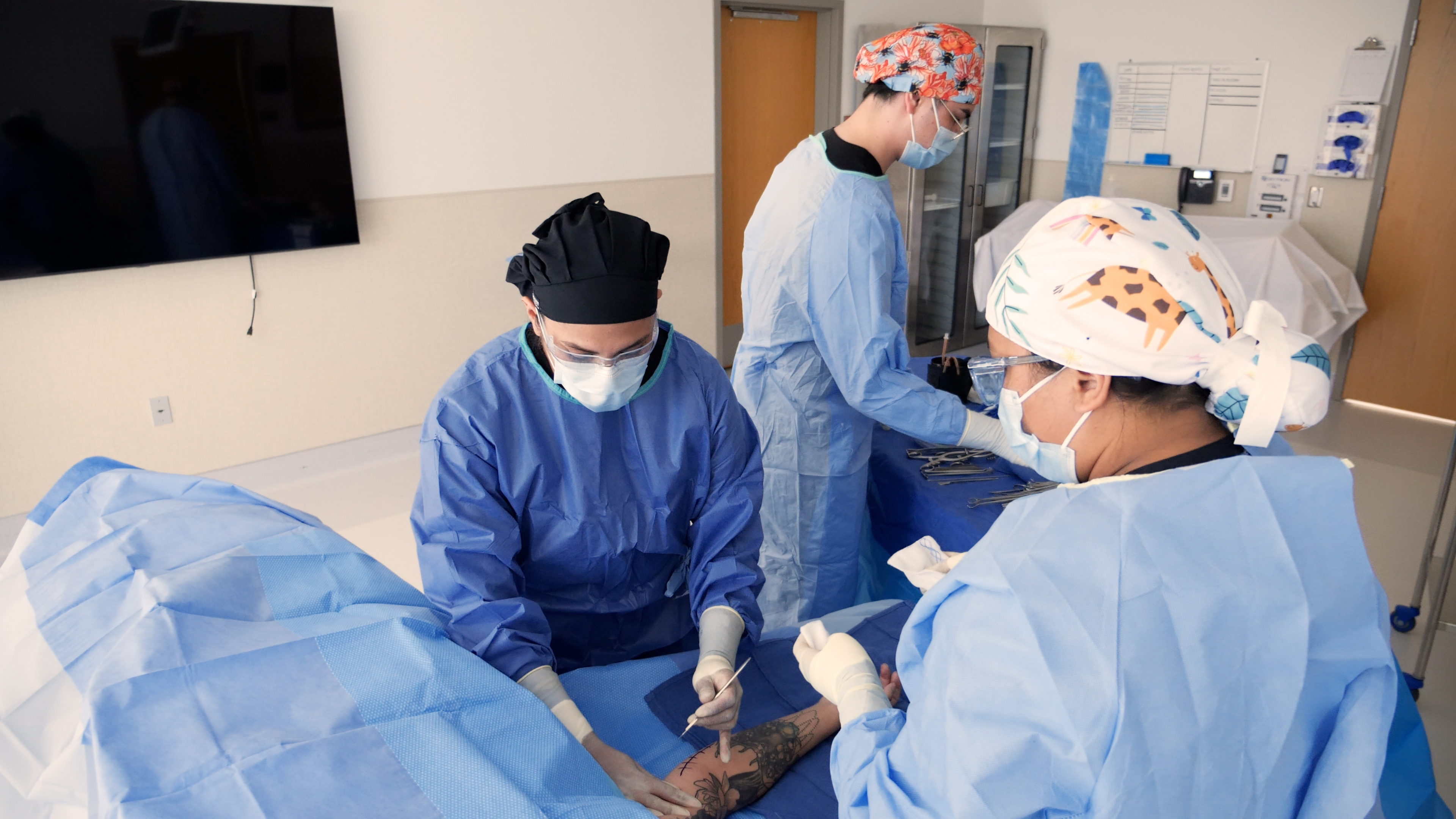
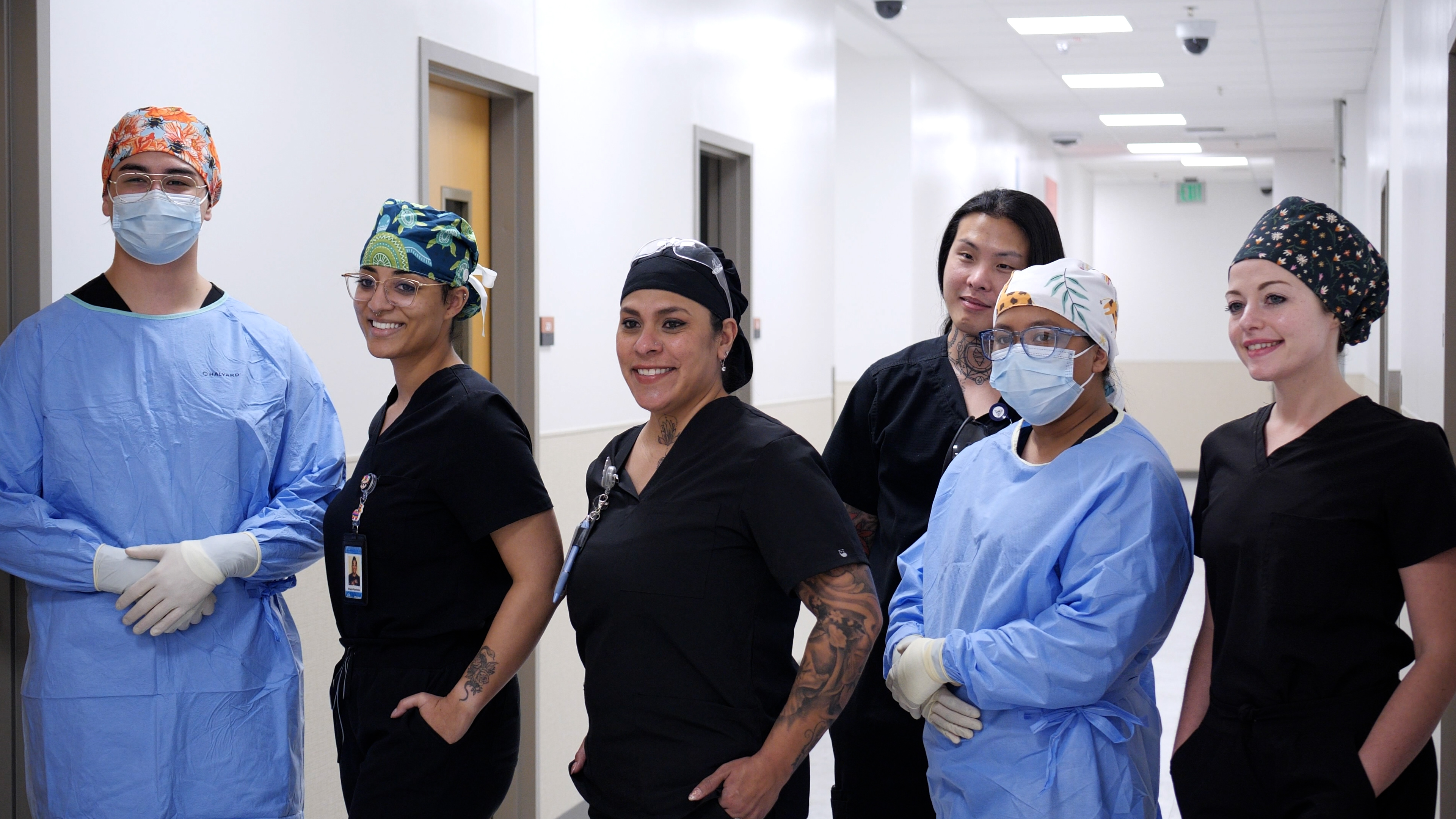
PPSC's Surgical Technology program prepares students to become essential members of the surgical team. Surgical technologists work alongside surgeons, registered nurses, anesthesia professionals, and other healthcare team members to provide safe, efficient patient care before, during, and after surgical procedures. Students develop the knowledge and hands-on skills needed to prepare the operating room, maintain the sterile field, organize and manage surgical instruments and supplies, anticipate the needs of the surgical team, and assist throughout surgical procedures. Through classroom instruction, hands-on laboratory practice, simulation, and clinical education in operating rooms throughout the region, students prepare for entry-level employment as surgical technologists and national certification.
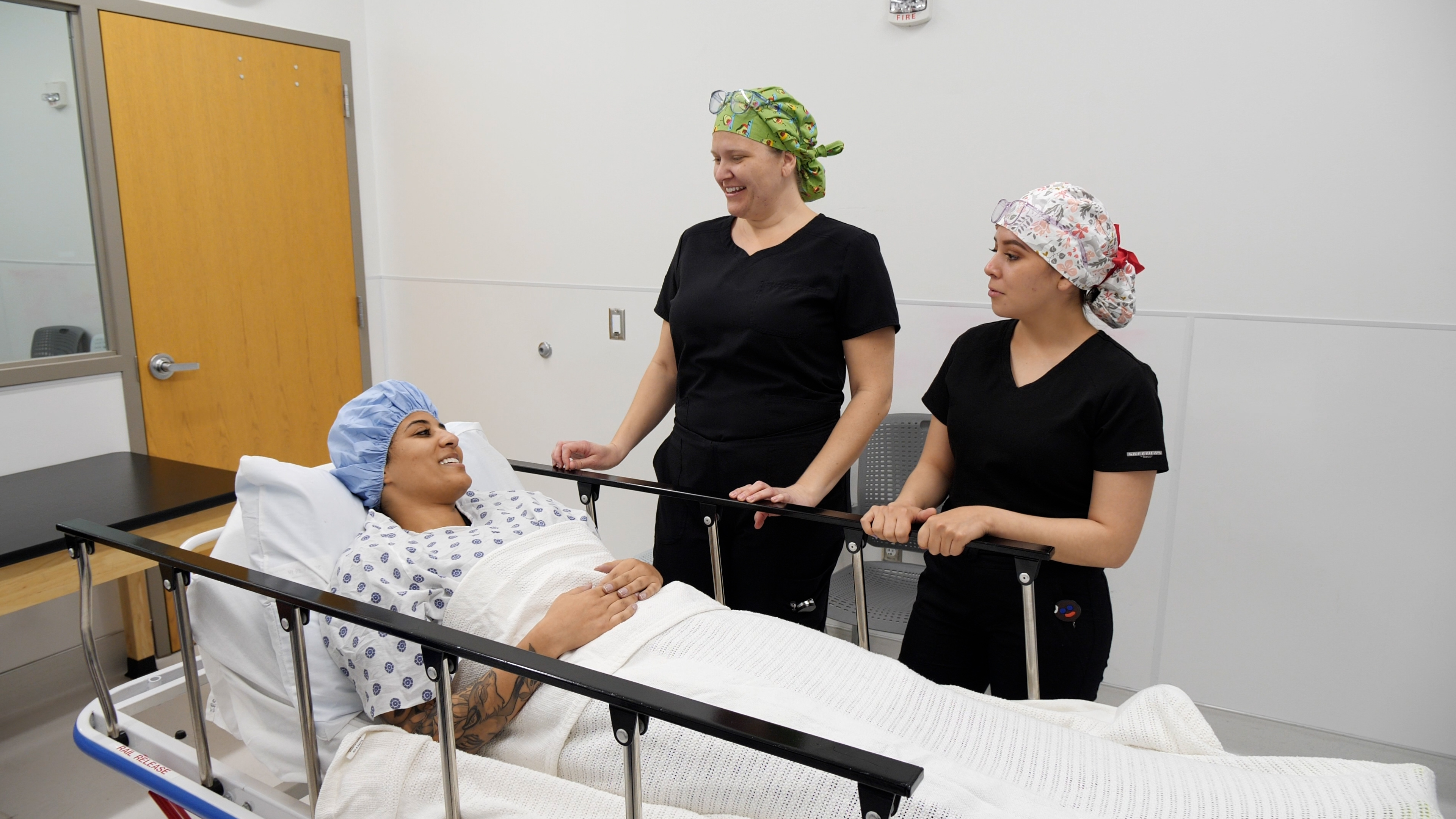
medical team bedside

what do ppsc surgical technology students learn?

PPSC's Surgical Technology program combines classroom instruction, hands-on laboratory practice, simulation, and clinical education to prepare students for entry-level practice as surgical technologists.

Students learn to:

  • Apply medical terminology, anatomy, physiology, microbiology, and pharmacology to surgical patient care
  • Identify, prepare, and safely handle surgical instruments, equipment, supplies, and medications
  • Apply principles of aseptic technique and maintain the sterile field
  • Prepare the operating room and sterile field for surgical procedures
  • Perform surgical counts and support safe patient care practices
  • Anticipate the needs of the surgeon and surgical team throughout a procedure
  • Understand surgical procedures across multiple specialties
  • Demonstrate effective communication and teamwork within the perioperative environment
  • Apply critical thinking and problem-solving skills in the operating room
  • Demonstrate professional, ethical, and accountable behavior
  • Perform the responsibilities of the surgical technologist within the appropriate scope of practice

Students develop these skills progressively throughout the program before applying them during clinical education at affiliated hospitals and surgical facilities.

Surgical Technology OAE Pass Rates

The Outcomes Assessment Examination (OAE) pass rate represents the percentage of Surgical Technology graduates who successfully pass the program’s required national credentialing examination. The OAE pass rate is an important measure of program effectiveness and demonstrates how well graduates are prepared to enter the profession as credentialed surgical technologists.

Annual Report Year OAE Pass Rate
2024 90.9%
2025 99.91%
2026 87.5%
students working together
open book icon

Surgical Services Student Handbook and Clinical Manual

The Surgical Services Student Handbook and Clinical Policy and Procedures Manual provide important information about the expectations and requirements of the Surgical Technology Program.

Prospective students are strongly encouraged to read both documents before applying to understand the academic, attendance, professional, clinical, and progression expectations of the program.

Students accepted into the Surgical Technology Program are required to read and become familiar with both documents. Enrolled students are responsible for knowing and following all policies, procedures, requirements, and expectations outlined in the handbook and clinical manual throughout the program.
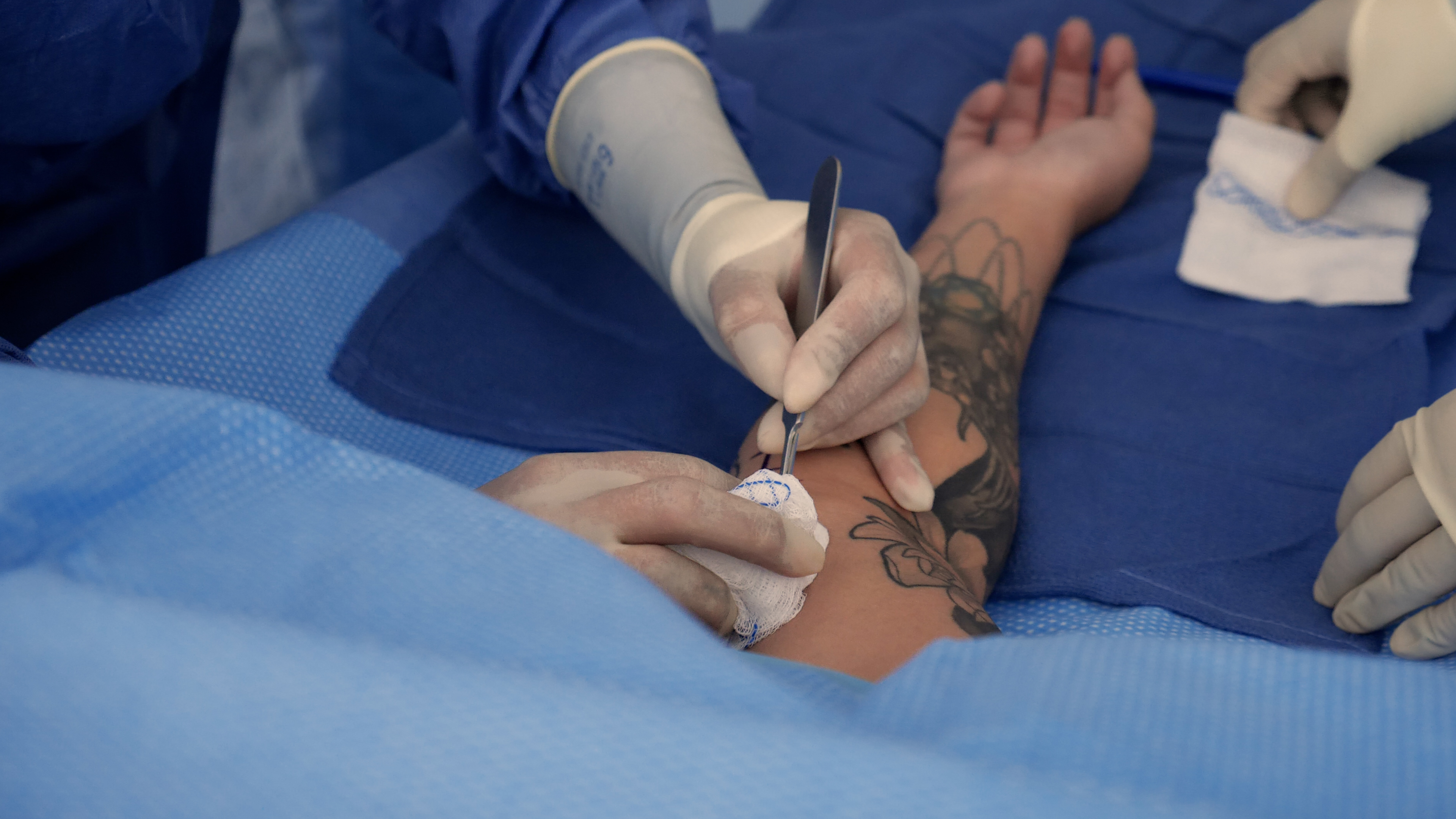

medical science student

Prerequisite Requirements

Students must meet the following requirements to be eligible for admission to the Surgical Technology Program:
  • Minimum cumulative GPA of 2.75
  • Required science coursework must have been completed within the past seven years
  • Prerequisite coursework must be completed or actively in progress at the time of application
  • All required prerequisite coursework must be successfully completed before the student begins the Surgical Technology Program

Required Prerequisite Courses
  • ENG 1021 English Composition I
  • MAT 1140 Career Mathematics or higher
  • HPR 1045 Medical Terminology for Health Professions
  • BIO 2101 Human Anatomy & Physiology I
  • BIO 2104 Basic Microbiology

Courses That May Be Completed During the Program
The following courses are required for the degree but do not need to be completed before admission:
  • BIO 2102 Human Anatomy & Physiology II may be completed during the first semester of the Surgical Technology Program.
  • PSY 2440 Human Growth and Development may be completed during the first or second semester of the Surgical Technology Program.
Students are encouraged to complete BIO 2102 and PSY 2440 before entering the program when possible to reduce their course load during the Surgical Technology sequence.

Transfer or Previous Coursework
Students who completed prerequisite coursework at another college or university should have their transcripts evaluated by Pikes Peak State College.

Courses that do not transfer as a direct equivalent or science courses completed outside the required timeframe may require additional departmental review.

Meeting the minimum prerequisite requirements does not guarantee admission to the Surgical Technology Program.
Alert Icon

Application Process

The Surgical Technology Program admits students twice each year for Fall and Spring cohorts. Applications are accepted only during the designated application periods.

Fall Cohort
Application Window: May 1 through June 1
Interviews: June
Classes Begin: August

Spring Cohort
Application Window: September 1 through October 1
Interviews: October
Classes Begin: January

How to Apply
Applications are accepted May 1–June 1 for Fall admission and September 1–October 1 for Spring admission.

During the application window, complete the Surgical Technology Program application:

Apply to Surgical Technology 

Prerequisite coursework may be in progress when you apply but must be successfully completed before the program begins.

After the application period closes, the Surgical Technology Department reviews applications to determine eligibility. Qualified applicants are invited to participate in an in-person interview with the department.

The program has a limited number of available seats. Meeting the minimum admission requirements and participating in an interview do not guarantee admission.

Applicants will be notified of their admission status after the interview and selection process is complete.

Important Enrollment Requirements

Students accepted into the Surgical Technology Program must complete all program and clinical compliance requirements. These requirements are necessary for participation in clinical education.

Background Check and Drug Screening
Upon acceptance into the program, students are required to complete a criminal background check and drug screening through the program's designated compliance system. Instructions for completing these requirements are provided after acceptance.

Students must meet the background check requirements established by the Colorado Community College System (CCCS). Disqualifying offenses and eligibility requirements are outlined in CCCS SP 4-10c Student Background Checks.

Students must also meet the eligibility requirements of assigned clinical facilities. Inability to meet background check, drug screening, or clinical facility requirements may affect a student's ability to participate in required clinical education and complete the program.

Immunization and Health Requirements
Students must provide documentation of required immunizations, health screenings, and certifications, including:
  • TB: Annual TB screening
  • Tdap: Current within the past 10 years
  • Hepatitis B: Completed vaccination series or documentation of immunity by titer
  • MMR: Vaccination or documentation of immunity by titer
  • Varicella: Vaccination or documentation of immunity by titer
  • Influenza: Current seasonal influenza vaccination
  • COVID-19: Completed vaccination series as required by clinical affiliation agreements
  • BLS/CPR: Current American Heart Association BLS Provider certification
Students are responsible for maintaining all required health and clinical compliance documentation throughout the program.

Clinical affiliates may establish additional or more restrictive health and safety requirements. Immunization and clinical compliance requirements are subject to change based on healthcare facility requirements and clinical affiliation agreements.

Detailed instructions, documentation requirements, and submission deadlines are provided following acceptance into the program.

Mandatory Program Orientation
Accepted students are required to attend Surgical Technology Program Orientation before beginning the program.

Orientation information, including the date, time, location, required documentation, and preparation instructions, will be provided to accepted students.
checkmark graphic
students practicing clinicals

Clinical Education

Clinical education is completed during the final semester of the Surgical Technology Program at affiliated hospitals and surgical facilities throughout the region.

Students are assigned to clinical sites by the Surgical Technology Program and must follow the schedule established by their assigned facility. Clinical schedules are typically Monday through Friday and may begin as early as approximately 6:30 a.m.

Students should plan for clinical education to function much like a full-time work schedule during the final semester.

Clinical Case Requirements
To meet program and accreditation requirements, students must complete a minimum of 120 surgical procedures, including:
  • 30 General Surgery cases
  • 90 Specialty Surgery cases
  • Required first scrub and second scrub experiences
  • Required clinical competencies demonstrating safe and effective surgical technology practice
Students are responsible for documenting their clinical experiences and progress throughout the clinical semester.

Clinical Placement
Clinical placements are arranged by the Surgical Technology Program based on educational needs, clinical site availability, and affiliation agreements.

Students may be assigned to clinical facilities throughout the region and should be prepared to travel to their assigned site. Placement at a specific hospital, facility, geographic location, or shift cannot be guaranteed.

Unpaid clinical education is the standard. Paid apprenticeship opportunities may occasionally be available through participating healthcare partners; however, availability is not guaranteed.

Students must remain compliant with all program and clinical facility requirements to participate in clinical education.


The demand for Surgical Technologists is rapidly growing, especially in Colorado. Graduates are well-prepared to enter the workforce and immediately contribute to surgical teams. The program's curriculum aligns with industry standards, ensuring students gain the competencies employers seek.

Learn more about the Surgical Technology AAS Degree.

The Surgical Technology Program is completed over three consecutive semesters. Students may begin the program in either the Fall or Spring semester and continue through the Summer semester without a break in the program sequence.

Fall Start
First Semester: Fall
  • STE 1000 Fundamentals of Surgical Technology
  • STE 1001 Surgical Technology Skills Lab
  • STE 1005 Pharmacology for Surgical Technologists
  • BIO 2102 Human Anatomy & Physiology II, if needed
Second Semester: Spring
  • STE 1010 Surgical Procedures I
  • STE 1015 Surgical Procedures II
  • STE 1020 Surgical Procedures III
  • PSY 2440 Human Growth and Development, if needed
Final Semester: Summer
  • STE 1081 Internship I
  • STE 1082 Internship II
  • STE 1083 Internship III
  • STE 2068 Surgical Technology Seminar

Spring Start
First Semester: Spring
  • STE 1000 Fundamentals of Surgical Technology
  • STE 1001 Surgical Technology Skills Lab
  • STE 1005 Pharmacology for Surgical Technologists
  • BIO 2102 Human Anatomy & Physiology II, if needed
Second Semester: Summer
  • STE 1010 Surgical Procedures I
  • STE 1015 Surgical Procedures II
  • STE 1020 Surgical Procedures III
  • PSY 2440 Human Growth and Development, if needed
Final Semester: Fall
  • STE 1081 Internship I
  • STE 1082 Internship II
  • STE 1083 Internship III
  • STE 2068 Surgical Technology Seminar
Program Scheduling
Surgical Technology courses are offered in a structured cohort sequence and must be completed in the designated order.

During the first two semesters, students participate in classroom, laboratory, and simulation education. The final semester includes clinical education at assigned healthcare facilities and STE 2068 Surgical Technology Seminar.

Clinical schedules are based on assigned facility schedules and may require attendance Monday through Friday beginning early in the morning.

Students should plan their employment, transportation, childcare, and other responsibilities around the required program schedule.

Students should plan for expenses beyond standard tuition and college fees when entering the Surgical Technology Program.

Additional program-related expenses may include:
  • Textbooks and required learning resources
  • Surgical Technology laboratory supplies
  • Scrubs, shoes, and other required attire
  • Background check and drug screening
  • Immunizations, health screenings, and required documentation
  • American Heart Association BLS Provider certification
  • Clinical tracking and compliance systems
  • Transportation to and from assigned clinical sites
  • Certification examination preparation and related expenses
  • Other program or clinical requirements
Program costs are estimates and are subject to change. Tuition and college fees are established by Pikes Peak State College and may vary based on residency, credit hours, financial aid eligibility, and other factors.

Students are encouraged to review current PPSC tuition and fee information and speak with Financial Aid regarding available grants, scholarships, and other funding opportunities.

Tuition & Fees

Financial Support

The PPSC Surgical Technology Program is accredited by the Commission on Accreditation of Allied Health Education Programs (www.caahep.org, 9355 113th St. N, #7709 Seminole, FL 33775, (727) 210-2350) upon the recommendation of the Accrediting Review Council on Education in Surgical Technology and Surgical Assisting. (www.arcstsa.org).
CAAHEP Logo

Interested in applying to the Surgical Technology Program? Start preparing early.

Apply to Pikes Peak State College if you are not already a current student.

Review the prerequisite, academic, clinical, immunization, background check, and other program requirements outlined on this page.

Make sure required prerequisite courses are completed or in progress before applying. All required prerequisites must be successfully completed before beginning the Surgical Technology Program.

Prospective students are strongly encouraged to review both documents before applying so they understand the academic, attendance, professional, and clinical expectations of the program.

Applications are accepted twice each year:

  • Fall Cohort: May 1 through June 1
  • Spring Cohort: September 1 through October 1

Qualified applicants will be invited to participate in an in-person interview following the close of the application period.

Applicants are responsible for monitoring their PPSC email for application updates, interview information, admission decisions, and additional instructions.

Prerequisite Semester
ENG 1021: English Composition – 3 credits
MAT 1120/1140: Career Mathematics or higher – 3 credits
HPR 1039: Medical Record Terminology or higher – 2 credits
BIO 2101*: Human Anatomy and Physiology – 4 credits
BIO 2104*: Microbiology – 4 credits
Total: 16 credits

Fall Semester
STE 1000: Fundamentals of Surgical Technology – 6 credits
STE 1005: Pharmacology for Surgical Technologists – 2 credits
STE 1001: Surgery Technologists Skills Lab – 4 credits
BIO 2102**: Anatomy and Physiology II – 4 credits
Total: 16 credits

Spring Semester
STE 1010: Surgical Procedures I – 3 credits
STE 1015: Surgical Procedures II – 3 credits
STE 1020: Surgical Procedures III – 3 credits
PSY 2440***: Human Growth and Development – 3 credits
Total: 12 credits

Summer Semester
STE 1081: Internship I – 4 credits
STE 1082: Internship II – 4 credits
STE 1083: Internship III – 6 credits
STE 2068: Surgical Tech Seminar – 2 credits
Total: 16 credits

Notes:

  • All students must maintain a 76% or higher in each required course (Surgical Technology and non-Surgical Technology courses).
  • *All BIO courses must be taken within seven years of admission.
  • **BIO 2102 must be completed by the second semester.
  • ***PSY 2440 must be completed by the third semester.

The PPSC Surgical Technology Program is accredited by the Commission on Accreditation of Allied Health Education Programs (www.caahep.org, 9355 113th St. N, #7709 Seminole, FL 33775, (727) 210-2350) upon the recommendation of the Accrediting Review Council on Education in Surgical Technology and Surgical Assisting. (www.arcstsa.org).
CAAHEP Logo

cutout of PPSC student

Next Steps

Stay Tuned: Look out for an email in April containing the application link and additional instructions.

Prepare: Ensure your prerequisites are completed or on track for completion before the Fall semester.

Get Ready: Gather the necessary documentation and prepare for the application process.
person thinking graphic

Did You Know We Offer a Sterile Processing Program?

We are excited to introduce you to a dynamic and crucial field within the healthcare sector—Sterile Processing Technology. At the heart of surgical operations and patient care, the role of a Sterile Processing Technician is essential for maintaining the highest standards of cleanliness, safety, and efficiency in healthcare environments.